
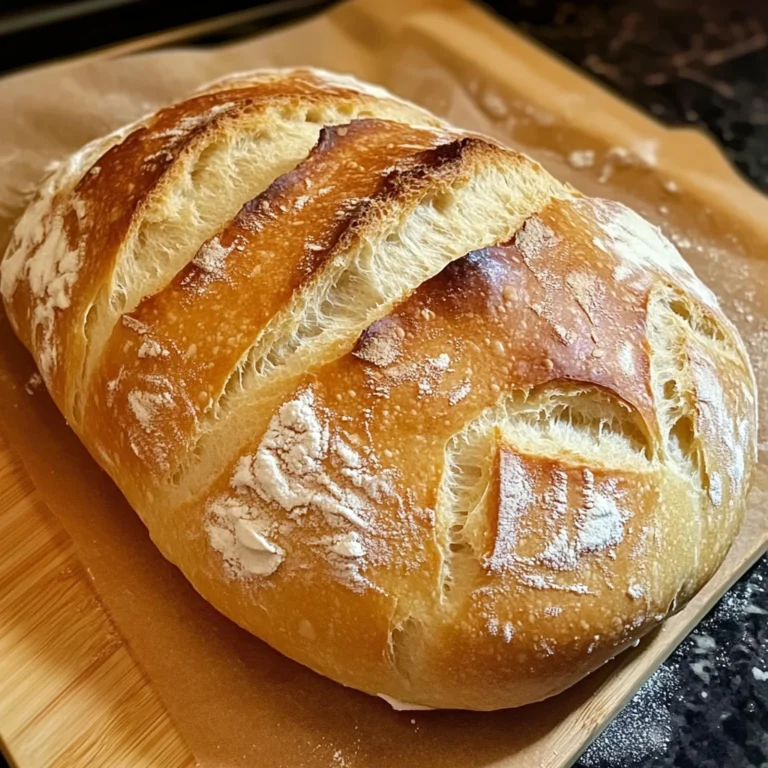
Ah, the alluring aroma of freshly baked Crusty Italian Bread – is there anything more enticing? Whether you’re dipping it in savory olive oil, pairing it with a hearty soup, or simply enjoying a slice on its own, this quintessential bread is the foundation of countless delectable Italian dishes. But did you know you can easily recreate that irresistible bakery-quality crust and crumb in your own kitchen? Let’s dive into the secrets of making the perfect Crusty Italian Bread at home.
Table of Contents
Ingredients for Crusty Italian Bread
The key to achieving that signature crusty exterior and soft, chewy interior lies in the right combination of ingredients. Here’s what you’ll need to bake your own Crusty Italian Bread:
- 3½ cups all-purpose flour – Bread flour can also be used for an even chewier texture.
- 1½ teaspoons salt – Just the right amount to enhance the flavor.
- 1 tablespoon granulated sugar – A touch of sweetness to balance the yeast.
- 1¼ cups warm water (110°F) – The ideal temperature for proofing the yeast.
- 2¼ teaspoons active dry yeast – Essential for creating that gorgeous rise and airy crumb.
- Cornmeal (for dusting) – This helps create a crisp, golden crust.
With these simple ingredients, you’re well on your way to baking a Crusty Italian Bread that will have your family and guests raving.
Step-by-Step Guide to Making Crusty Italian Bread
Activate the Yeast
The first step in creating your Crusty Italian Bread is to activate the yeast. In a large mixing bowl, combine the warm water, sugar, and yeast. Give it a gentle stir and let the mixture sit for 5-10 minutes until it becomes nice and frothy. This is a crucial step, as the yeast is the key to achieving that perfect rise and texture.
Mix the Dough
Next, add the flour and salt to the yeast mixture. Using a wooden spoon, stir until a rough dough starts to form. Don’t be afraid to get your hands in there – the dough will come together beautifully.
Knead the Dough
Time to get your hands dirty! Turn the dough out onto a lightly floured surface and knead for 8-10 minutes. You’ll know the dough is ready when it becomes smooth, elastic, and passes the “windowpane test” – you should be able to stretch a small piece of dough thin enough to see light through it without it tearing.
First Rise
Place the kneaded dough in a lightly greased bowl, cover with a damp cloth, and let it rise in a warm spot for 1-1½ hours, or until it has doubled in size. This first rise is crucial for developing the dough’s structure and flavor.
Shape the Dough
Punch down the risen dough to release any air bubbles, then shape it into a round or oval loaf. Place the shaped dough on a baking sheet dusted with cornmeal.
Second Rise
Cover the shaped dough and let it rise for another 30-45 minutes. This second rise will help the bread puff up and develop its signature texture.
Bake the Bread
Preheat your oven to 450°F (232°C) and place a shallow pan of water on the bottom rack to create steam – this is the secret to that crispy, golden crust. Make a few slashes on the top of the loaf with a sharp knife, then bake for 25-30 minutes until the crust is a deep, burnished brown and the loaf sounds hollow when tapped.
Cool and Enjoy
Remove the Crusty Italian Bread from the oven and let it cool on a wire rack before slicing into it. The wait is agonizing, but trust me, it’s worth it. Enjoy your homemade masterpiece with your favorite Italian dishes or simply on its own with a drizzle of olive oil and a sprinkle of herbs.
Serving Suggestions and Pairings
The versatility of Crusty Italian Bread is truly impressive. Here are some delicious ways to enjoy it:
- Dip it in olive oil and balsamic vinegar for a classic Italian appetizer.
- Serve it alongside hearty soups and stews to soak up every last drop of the flavorful broth.
- Create an Italian antipasto platter with cured meats, olives, roasted peppers, and cheeses.
- Use leftover bread for bruschetta, croutons, or breadcrumbs in other dishes.
The possibilities are endless when you have a loaf of fresh, Crusty Italian Bread on hand.
FAQs About Crusty Italian Bread
What type of flour is best for achieving a crusty texture in Italian bread?
To achieve a crusty texture in Italian Bread, it’s best to use bread flour rather than all-purpose flour. Bread flour has a higher protein content, typically around 12-14%, which helps develop gluten more effectively during kneading. This gluten development is crucial for creating the structure needed for a chewy, crusty loaf. If you prefer a lighter texture, you can also blend bread flour with a small amount of all-purpose flour, but for the best crust, stick primarily to bread flour. Additionally, consider using Italian “00” flour, which is finely milled and traditionally used in Italian baking, as it can yield excellent results in terms of texture and flavor.
How do I know when my bread is fully baked?
To determine if your Crusty Italian Bread is fully baked, there are a few methods to try. First, you can tap the bottom of the loaf; if it sounds hollow, that’s a good indication it’s done. Additionally, using a kitchen thermometer can help; the internal temperature of the bread should reach about 190°F to 210°F for it to be fully cooked. Another visual cue is the crust color; it should be a deep golden brown. If you find that the crust is browning too quickly, you can tent the bread with aluminum foil during the last part of baking to prevent burning while ensuring it cooks through.
Can I add herbs or other ingredients to my Crusty Italian Bread?
Yes, you can definitely add herbs and other ingredients to enhance the flavor of your Crusty Italian Bread! Popular additions include fresh or dried herbs like rosemary, thyme, or oregano, which can be incorporated directly into the dough during mixing. Additionally, you can fold in ingredients such as olives, sun-dried tomatoes, or cheese to create a more flavorful loaf. Just be mindful of the moisture content of added ingredients, as too much moisture can affect the bread’s texture and rising ability. It might be helpful to slightly reduce the water in your recipe if you’re adding wet ingredients.
Why is my bread not developing a good crust?
Several factors can affect the development of a good crust on your Crusty Italian Bread. Firstly, ensure that your oven is adequately preheated, as a hot oven is crucial for crust formation. Additionally, introducing steam in the early stages of baking can help achieve a better crust; you can do this by placing a pan of water on the bottom rack of the oven or by misting the oven with water right after placing the bread inside. If the dough is not adequately shaped or if it has a too wet consistency, it may also hinder crust formation. Lastly, consider the baking time; underbaking can lead to a softer crust, so ensure your bread is baked until golden brown and sounds hollow when tapped.
More Related Recipes You Might Enjoy
- Garlic Parmesan Focaccia Bread
- Authentic Italian Stromboli
- Creamy Garlic Sauce Over Perfectly Grilled Steak
Baking Crusty Italian Bread at home is a truly rewarding experience. With a little time, patience, and the right technique, you can enjoy the unbeatable aroma and flavor of a freshly baked loaf straight from your own oven. Whether you’re a seasoned baker or a novice in the kitchen, this recipe is sure to become a staple in your culinary repertoire. So, what are you waiting for? Let’s get baking!
For more snack ideas and kitchen inspiration, follow me on Pinterest.
Print
Make Crusty Italian Bread at Home: The Ultimate Recipe Guide
- Prep Time: 20 minutes
- Cook Time: 30 minutes
- Total Time: 1 hour 50 minutes
- Yield: 1 loaf 1x
- Category: Bread
- Method: Baking
- Cuisine: Italian
- Diet: Vegetarian
Description
Mastering the Art of Homemade Perfection
Ingredients
- 3 1/2 cup all-purpose flour
- 1 1/2 teaspoon salt
- 1 tablespoon granulated sugar
- 1 1/4 cup warm water
- 2 1/4 teaspoon active dry yeast
- Cornmeal (for dusting)
Instructions
1. Activate the yeast: In a large mixing bowl, combine the warm water, sugar, and yeast. Stir gently and let sit for 5-10 minutes until frothy.
2. Mix the dough: Add the flour and salt to the yeast mixture. Stir until a rough dough forms.
3. Knead the dough: Turn the dough onto a floured surface and knead for 8-10 minutes until smooth and elastic.
4. First rise: Place the dough in a greased bowl, cover with a damp cloth, and let rise for 1-1 1/2 hours until doubled in size.
5. Shape the dough: Punch down the risen dough, shape it into a loaf, and place on a baking sheet dusted with cornmeal.
6. Second rise: Cover and let rise for another 30-45 minutes.
7. Bake the bread: Preheat oven to 450°F. Place a pan of water on the bottom rack. Make slashes on top of the loaf and bake for 25-30 minutes until golden brown and hollow sounding when tapped.
8. Cool and enjoy: Let cool on a wire rack before slicing.
Notes
Serve with olive oil, balsamic vinegar, soups, or as part of an antipasto platter.
Nutrition
- Serving Size: 1 slice
- Calories: 120
- Sugar: 1g
- Sodium: 300mg
- Fat: 0.5g
- Saturated Fat: 0g
- Unsaturated Fat: 0g
- Trans Fat: 0g
- Carbohydrates: 24g
- Fiber: 1g
- Protein: 4g
- Cholesterol: 0mg